
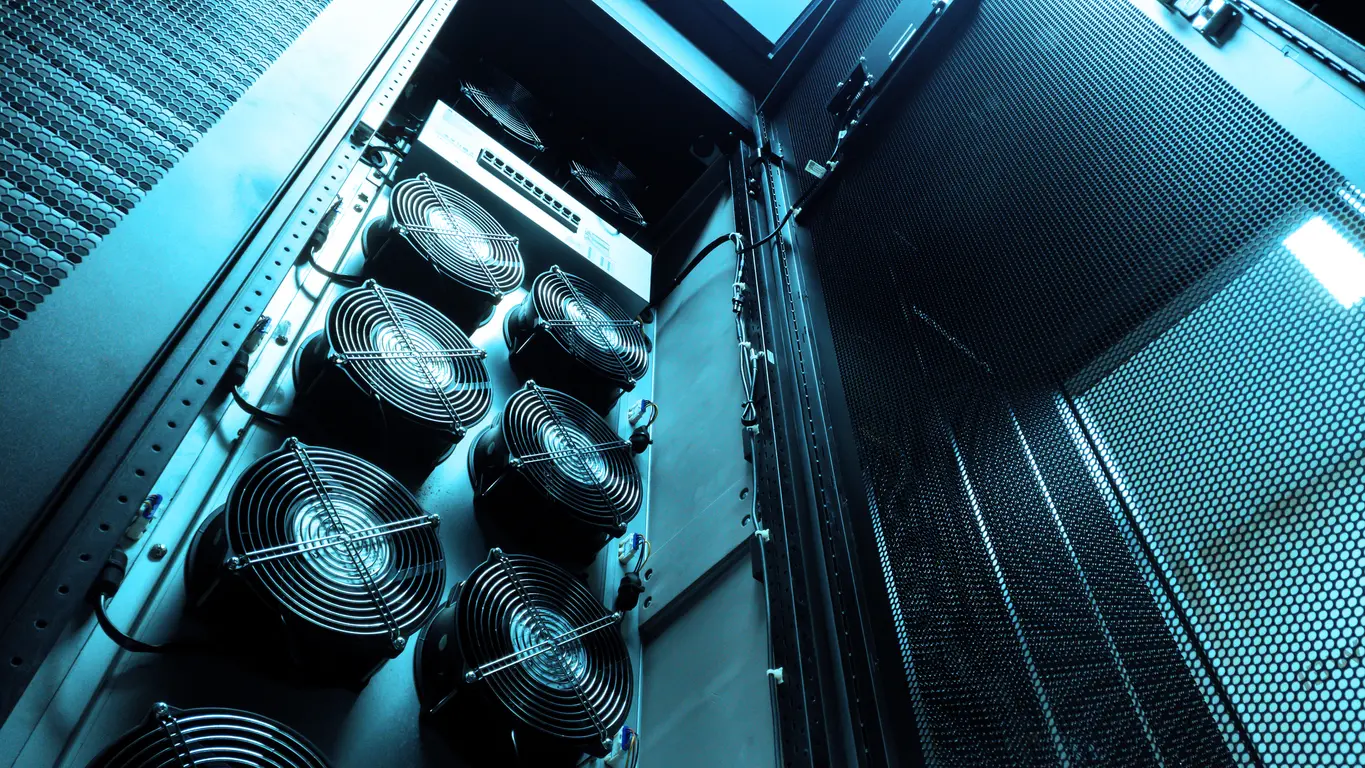
In data center environments, software tends to dominate the conversation, but the physical components of a data center are equally important in daily operations because they regulate temperatures and distribute power across critical equipment.
Their role in data center reliability becomes clearer through the Uptime Institute’s Tier Standard, which classifies data center facilities by design criteria including concurrent maintainability and fault tolerance, since both depend on dimensionally precise hardware.
Explore Vander-Bend’s guide below outlines the essential metal parts featured in most modern data centers and how the quality of fabrication influences each part’s performance. For more information, or to learn more about our capabilities and the industries we serve, give our team a call.
Racks and Cabinets
Most server rack designs follow the EIA-310 standard, which specifies a 19-inch mounting width and a rack unit (U) of 1.75 inches. These frames are typically made from cold-rolled steel to reliably support fully populated cabinets containing liquid-cooled GPU servers and related hardware weighing more than 3,000 pounds. Along with providing structural support, racks and cabinets use perforated doors to maximize airflow without compromising stability.
Server Chassis and IT Enclosures
Within each rack, server and storage systems are held in their own fabricated chassis that provide the necessary mechanical support and EMI shielding. Tolerances are particularly tight with these components of a data center since drive bays and sled rails need to align within fractions of a millimeter. An ill-fitting rail can stop a blind-mate connector short of full engagement. This can lead to intermittent faults that are hard to trace. Self-clinching fasteners and standoffs must also be installed carefully, so boards seat flat and grounding paths remain continuous.
Power Distribution Housing
Power distribution units require precision fabricated sheet metal assemblies as much as IT components of a data center. Switchgear cabinets and UPS housings protect personnel while safely routing current throughout the facility. Supporting that distribution, formed steel or aluminum busway housing provides technicians with access to add tap-off boxes without rewiring the floor.
Each enclosure must meet strict requirements for grounding continuity and arc flash containment. Precise hinge alignment and properly sized ventilation cutouts further ensure safe access and reliable operation throughout the equipment’s service life.
Liquid Cooling Frames and Brackets
As modern AI racks exceed 40 kW in many GPU deployments, thermal management presents a growing challenge for hyperscale environments. Direct-to-chip liquid cooling addresses these higher heat loads but adds more hardware to the white space. That equipment requires rigid CDU frames for pump stability and vibration control as well as manifold brackets for precise fitting alignment.
Containment and Blanking Panels
Containment systems keep supply air and exhaust air separated. Hot aisle configurations route exhaust back to cooling units, whereas cold aisle configurations enclose the intake aisle with roof panels and sliding end doors.
Both approaches require flat, precision-fabricated sheet metal panels because even small gaps can allow hot air to recirculate. Blanking panels serve a similar purpose by sealing empty rack units. Consistent flatness and clean edges allow these parts to be installed quickly and sealed reliably.
Cable Trays and Overhead Support Structures
Overhead cable trays and ladder racks hoist fiber and copper above the cabinets so the floor can remain clear for proper airflow. Components of a data center like these must support substantial distributed loads without sagging between hangers.
Deburred edges guard cable jackets during installation, and integrated bonding points tie every section into the facility grounding network. Vertical cable managers mounted to the sides of the rack carry that organization down to the equipment level.
Security Cages and Partitions
Colocation facilities separate shared data centers into private suites using wire mesh cages and solid partitions that allow airflow but restrict physical access to critical equipment.
Let Vander-Bend Create Your Facility’s Hardware
The racks, enclosures, and other hardware components of a data center are designed to work harmoniously with one another to protect powerful electrical equipment and ensure proper airflow. But, as rack densities increase, the tolerance for poorly fabricated hardware decreases. Reach out to Vander-Bend for leading sheet metal fabrication capabilities that help facilities operate efficiently.