
Metal Enclosures
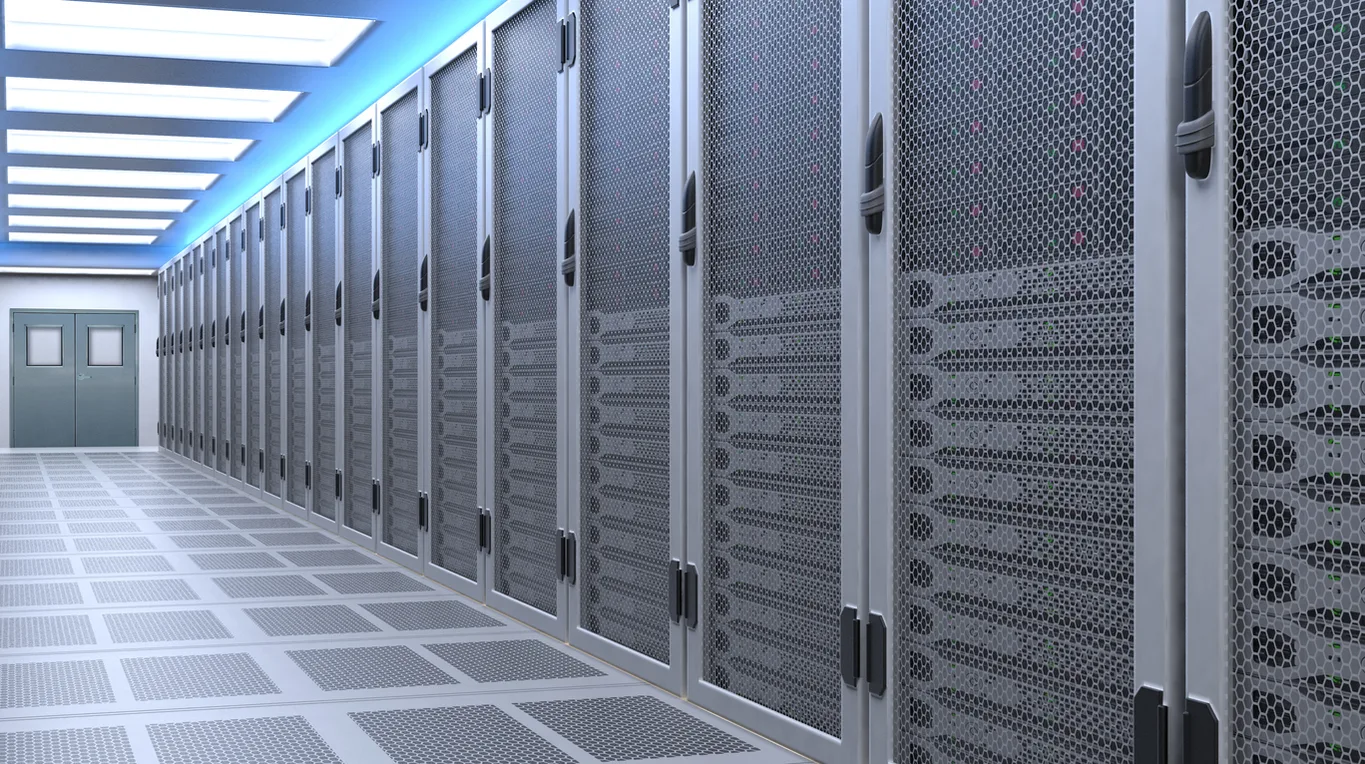
Data center enclosures regulate airflow around high-powered servers and protect them from electromagnetic interference. Without proper design and sheet metal fabrication, an enclosure may not perform these critical functions. Vander-Bend builds and assembles custom data center enclosures that get the details right.
For over twenty-five years, we have worked with OEMs and Tier suppliers serving hyperscale facilities. Our experience and capabilities influence every flat pattern we cut. Our engineers focus not just on nominal geometry, but on the conditions an enclosure will face once it’s installed in a hyperscale environment. The result is precision metalwork engineered for accurate fit and lasting performance.
Reach out today for enclosure solutions tailored to the needs of your application.
Types of Data Center Enclosures We Create
Chassis Assemblies
Chassis assembly and installation hinge on dimensional consistency. Even a slight standoff misalignment can interfere with motherboard seating, and an offset rail interface can lead to rack binding. Controlled forming and documented inspection verify that these features remain within tight tolerances. Uniform press force during self-clinching hardware installation extends that accuracy to thread alignment and panel flatness.
Consoles
Because data center personnel use consoles regularly, each unit must combine ergonomic access with structural rigidity. Vander-Bend evaluates hinge cycle life, panel flatness, and internal cable-routing paths to ensure consistent operation and organization. Strategic component placement improves access to controls and service points, which helps streamline maintenance. Structurally rigid construction limits panel deflection and maintains alignment throughout the console’s service life.
Power and Control Enclosures
Power and control enclosures have distinct requirements. Mounting points must support substantial loads, and conductor spacing must meet creepage and clearance standards. Knockouts and cutouts also need to align with the wiring diagram to prevent downstream assembly issues. We review panel layouts before production to confirm that the first assembled unit matches the drawing.
Engineering for Airflow
Vander-Bend sizes perforation patterns on data center enclosures, so the system’s operating point on your fan curve delivers proper airflow. We then evaluate performance under front-to-back airflow and hot-aisle conditions, working with your thermal team to refine pitch and web width, along with the ratio of sheet thickness to hole diameter to stay within the allowable pressure drop. Once the design is approved, our automated sheet metal manufacturing reproduces it consistently.
Learn more about the importance of optimizing airflow for data center racks here.
Aperture and Seam Design for EMI Control
Even small openings on data center enclosures can leak radiated emissions. Shielding effectiveness depends on an aperture’s largest dimension relative to the wavelengths being attenuated, so closely spaced small holes provide better shielding than a single long slot with the same total area.
Gaps between mating panels can likewise behave as slot antennas. Vander-Bend limits these gaps by maintaining panel flatness and proper fastener spacing as well as adding conductive gasketing when the application requires it.
Start Your Data Center Enclosure Project Today
If you have a chassis that runs hot or a console design that needs to scale, call Vander-Bend. Our engineers will review your requirements and build a custom data center enclosure that performs on the production line and in the field.
FAQs About Data Center Enclosures
Yes. Our electromechanical assembly line integrates fabricated enclosures with wiring harnesses, sensors, and related hardware, providing a complete assembly rather than a kit of parts.
Steel and aluminum are the most common data center enclosure materials. Pre-galvanized steel offers greater stiffness and low-frequency magnetic shielding at a lower cost. Aluminum weighs about one-third as much, making it suitable for high-mounted or frequently handled enclosures, and conducts heat effectively when the enclosure serves as a heat path.
Airflow and EMI requirements pull in opposite directions: smaller holes shield better but restrict airflow. Our team weighs both together to determine hole size, pattern, and open areas that meet your thermal targets without compromising emissions compliance.